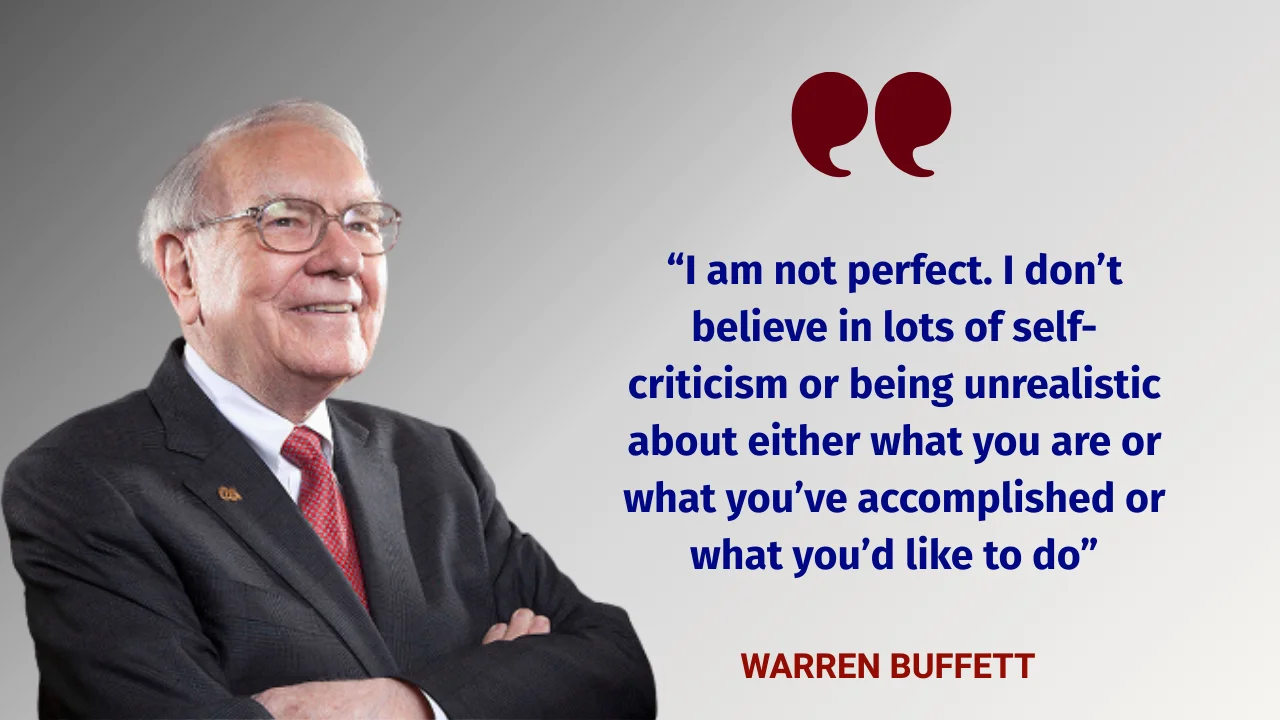
Warren Buffett self-criticism: Warren Buffett self-criticism is a topic that reveals an important lesson about success, humility, and personal growth. The famous investor shared a powerful thought about how people should view themselves and their achievements. Instead of being overly harsh on oneself or having unrealistic expectations, he believes in maintaining a balanced and honest view of life.
This article explores the meaning behind the statement shared by Warren Buffett in an interview highlighted by The Economic Times. We will understand what his words mean, why they matter, and how they can help people build a healthier mindset toward success, failure, and personal development.
Understanding Warren Buffett’s View on Self-Criticism
Warren Buffett self-criticism teaches an important lesson about self-awareness. In the interview, Buffett clearly stated that he does not believe in too much self-criticism or unrealistic expectations about what someone is or what they have achieved.
This does not mean ignoring mistakes. Instead, it means understanding your limits while appreciating your strengths. Many people often focus only on their failures and forget the progress they have made. Buffett suggests that a healthy mindset is about balance.
By avoiding extreme self-judgment, individuals can stay motivated and confident while still improving themselves.
Why Realistic Self-Evaluation Matters
Warren Buffett self-criticism also highlights the importance of realistic self-evaluation. People sometimes set impossible goals or compare themselves constantly with others. This can lead to frustration and loss of confidence.
Realistic self-evaluation helps in several ways:
- It keeps expectations practical and achievable
- It helps people recognize their real strengths
- It allows steady personal growth without stress
Buffett’s message encourages people to look at themselves honestly. Accepting who you are today is the first step toward becoming better tomorrow.
The Role of Humility in Success
Even after becoming one of the most successful investors in the world, Warren Buffett remains humble. His company, Berkshire Hathaway, is worth hundreds of billions, yet he often speaks about simple values like patience, honesty, and realistic thinking.
Warren Buffett self-criticism reflects this humility. Instead of pretending to be perfect, he openly admits that no one is perfect. This mindset keeps successful people grounded and open to learning.
Humility also helps people build strong relationships. When someone accepts their limits and respects others, they become easier to work with and learn from.
Lessons from Warren Buffett’s Philosophy
There are many life lessons hidden in Buffett’s simple statement. These lessons are not only useful for investors but for anyone trying to grow in life.
Key lessons to learn
- Accept that perfection does not exist
- Focus on progress rather than perfection
- Be realistic about goals and achievements
- Learn from mistakes without harsh self-judgment
These principles show why Warren Buffett self-criticism is a powerful mindset. It allows people to grow steadily while maintaining mental peace.
How This Advice Applies to Everyday Life
Many people struggle with self-doubt. Students worry about exams, professionals worry about careers, and entrepreneurs worry about business decisions. In such situations, Warren Buffett self-criticism offers a helpful perspective.
Instead of blaming yourself constantly, you should learn from mistakes and move forward. A balanced mindset improves confidence and productivity.
For example:
- A student can focus on improving weak subjects instead of feeling like a failure.
- A business owner can learn from losses instead of giving up.
- A professional can accept mistakes and develop new skills.
This approach creates long-term growth and emotional stability.
Buffett’s Mindset and Long-Term Success
The success of Warren Buffett is not only because of his investing skills. It is also because of his calm and realistic mindset.
Warren Buffett self-criticism shows that successful people do not constantly criticize themselves. Instead, they focus on learning and making better decisions over time.
This mindset helps avoid emotional decisions. In investing and in life, emotions like fear and regret can lead to poor choices. A balanced mindset allows people to think clearly and act wisely.
Practical Ways to Follow Buffett’s Advice
If you want to apply Warren Buffett self-criticism in your own life, there are some simple steps you can follow.
Simple habits to practice
- Reflect on your achievements regularly
- Accept mistakes as learning opportunities
- Set realistic goals for personal growth
- Avoid comparing yourself too much with others
These habits can help you develop a healthier relationship with yourself and your goals.
FAQs
1. What did Warren Buffett say about self-criticism?
Warren Buffett said he does not believe in excessive self-criticism or unrealistic thinking about what someone is, what they have achieved, or what they want to do.
2. Why is Warren Buffett’s advice important?
His advice encourages people to maintain a balanced mindset, accept their strengths and weaknesses, and focus on continuous improvement rather than harsh self-judgment.
3. How can this mindset help in personal growth?
A realistic and balanced mindset helps people stay motivated, learn from mistakes, and avoid unnecessary stress or self-doubt.
4. Does Warren Buffett believe in ignoring mistakes?
No, he believes in learning from mistakes but not being overly critical or unrealistic about them.
5. How can people apply this advice in daily life?
People can apply it by setting realistic goals, reflecting on achievements, learning from errors, and maintaining confidence in their abilities.