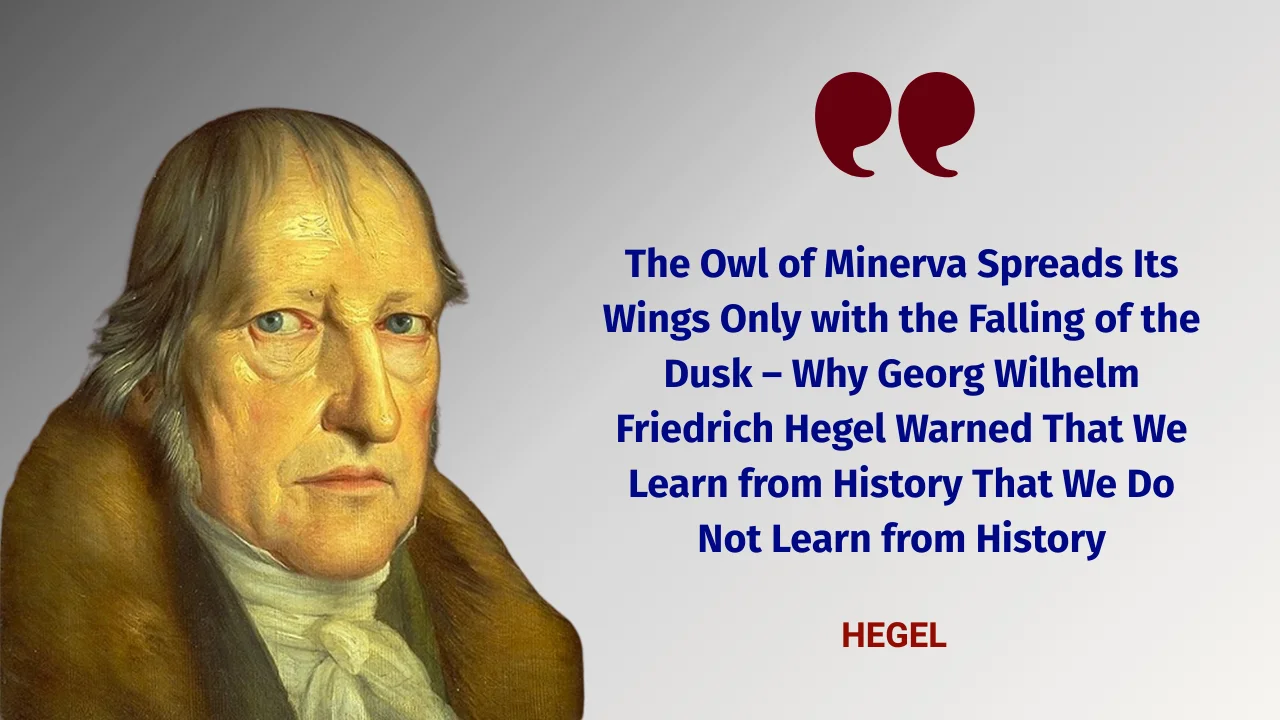
Quote of the Day by Hegel: Owl of Minerva quote is one of the most powerful philosophical lines that continues to inspire deep thinking about history, knowledge, and human behavior. The famous line about the owl spreading its wings at dusk reflects the idea that wisdom often comes only after events have already taken place. Many readers find this quote meaningful because it explains why people understand things clearly only when it is too late to change them.
This article explains the meaning of the Owl of Minerva quote, its connection with philosophy, and why Georg Wilhelm Friedrich Hegel believed that humans rarely learn from history even though history constantly teaches lessons. We will also explore the symbolism behind the owl, how the quote applies to modern society, and why it remains relevant today.
Who Was Georg Wilhelm Friedrich Hegel
Georg Wilhelm Friedrich Hegel was a German philosopher who lived in the late eighteenth and early nineteenth centuries. He is known for his deep ideas about history, society, and human progress. His work influenced many later thinkers and shaped modern philosophy.
Hegel believed that history moves through a process of ideas and conflicts. According to him, society grows through struggle, debate, and change. The Owl of Minerva quote appears in his work Philosophy of Right, where he explains that philosophy understands reality only after events have unfolded.
This idea suggests that wisdom comes late. Humans understand patterns and lessons only when they look back at what already happened.
Meaning of the Owl of Minerva Quote
The Owl of Minerva quote says that the owl spreads its wings only when dusk arrives. In simple words, this means wisdom appears only after the day has ended.
The owl represents knowledge and wisdom. In ancient mythology, the owl was connected to Minerva, the Roman goddess of wisdom. By using this symbol, Hegel explained that understanding comes only after events have already taken place.
This idea highlights an important truth about human behavior. People often realize mistakes only after they have experienced them. Philosophers, historians, and scholars analyze events after they occur, which means knowledge is often retrospective.
Symbolism Behind the Owl of Minerva
The symbol of the owl plays a very important role in understanding the Owl of Minerva quote. The owl is known as a creature that sees clearly in darkness, which represents deep insight.
Key meanings behind this symbol include:
- Wisdom appearing late
- Understanding coming after events occur
- Philosophy explaining reality rather than predicting it
- Reflection and learning through experience
Through this symbol, Hegel wanted to show that philosophy does not guide events before they happen. Instead, it explains them after society has already gone through change.
Why Hegel Said We Do Not Learn from History
One of the most famous ideas connected to Hegel is the statement that people learn from history that they do not learn from history. This thought fits closely with the Owl of Minerva quote.
Despite many examples from the past, societies often repeat the same mistakes. Wars, political conflicts, economic crises, and social struggles appear again and again.
Some reasons why humans fail to learn from history include:
- People forget past lessons over time
- New generations believe their situation is different
- Power and ambition often override wisdom
- Societies react emotionally rather than rationally
Hegel believed that history moves through a process of conflict and resolution. Even though lessons exist, human nature often leads to repeating similar patterns.
How the Owl of Minerva Quote Applies Today
The Owl of Minerva quote is still relevant in modern society. Many events in politics, economics, and global relations show that people often understand problems only after they happen.
For example, financial crises often lead to new economic rules only after major losses occur. Political conflicts lead to discussions about diplomacy after wars or tensions arise.
In daily life, the same idea can apply to personal decisions. People often gain wisdom from experience rather than advice. This shows that reflection plays an important role in learning.
Because of this, the Owl of Minerva quote continues to remind people that understanding takes time and often arrives after events unfold.
Key Lessons from the Owl of Minerva Quote
The Owl of Minerva quote offers several important lessons about knowledge and society.
- Wisdom often comes from reflection
- History provides lessons but people may ignore them
- Experience shapes understanding
- Philosophy explains events after they occur
These lessons encourage people to reflect on past experiences more carefully. By studying history and reflecting on events, individuals and societies can make better decisions in the future.
Why This Quote Still Inspires Thinkers
Philosophers, historians, and writers often discuss the Owl of Minerva quote because it explains how knowledge develops. It highlights the difference between action and understanding.
Many thinkers believe that reflection helps societies grow. Even though humans may repeat mistakes, awareness of past events still provides valuable insight.
The quote also reminds people to remain humble. No one fully understands events while they are happening. True understanding often appears only with time and distance.
FAQs
What does the Owl of Minerva quote mean?
The Owl of Minerva quote means that wisdom and understanding come only after events have already happened. People often understand reality clearly only when they look back at it.
Why did Hegel use an owl in his quote?
Hegel used the owl because it represents wisdom in ancient mythology. The owl of Minerva symbolizes knowledge that appears during reflection.
Where did the Owl of Minerva quote come from?
The quote appears in Hegel’s work Philosophy of Right, where he discusses the role of philosophy in understanding society and history.
Why do people say we do not learn from history?
Many thinkers believe societies repeat similar mistakes because human nature, ambition, and emotion often overpower historical lessons.
Is the Owl of Minerva quote relevant today?
Yes. The Owl of Minerva quote still applies to modern politics, economics, and personal life because people often gain wisdom only after experiencing events.