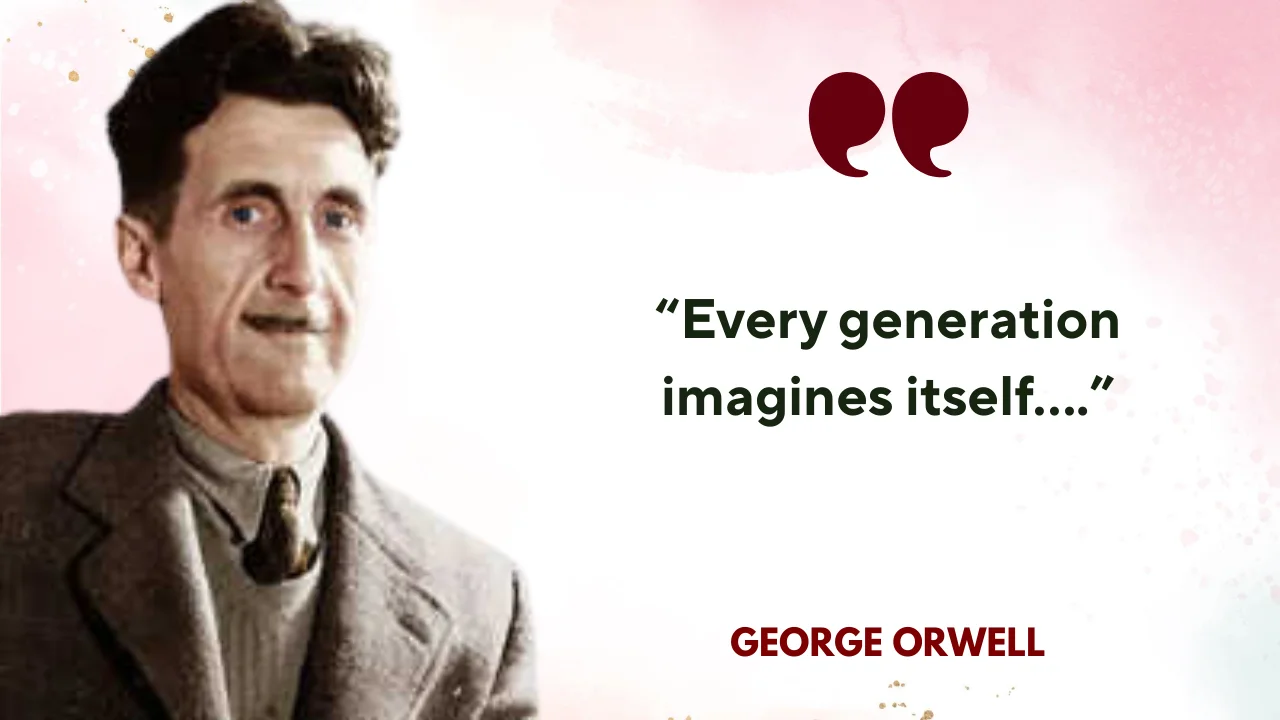
Quote of the day by George Orwell: Every generation imagines itself to be smarter, more aware, and more progressive than the people who came before it. This powerful thought from George Orwell has remained relevant for decades because it reflects a pattern that repeats again and again throughout history. When people look at the past, they often assume that previous generations lacked knowledge or vision, while their own time represents the peak of progress. The quote Every generation imagines itself highlights how easily people develop this belief without questioning it deeply.
This article explores the deeper meaning behind Every generation imagines itself, why this idea continues to resonate in modern society, and how the quote connects with culture, technology, and social change today. You will also see how this perspective appears in different historical periods and why Orwell’s observation still provides an important lesson about humility, awareness, and learning from the past.
Understanding “Every Generation Imagines Itself” and Why the Quote Still Matters
The quote Every generation imagines itself captures a timeless truth about how humans see progress and change. People naturally believe that their era represents improvement compared with earlier times. This thinking can be seen in politics, culture, education, and technology. For example, modern generations often assume they are more informed because of digital access to information. However, earlier generations also believed they were living in the most advanced time in history. This repeating cycle is exactly what Orwell was pointing out. Understanding the deeper message behind Every generation imagines itself encourages readers to question assumptions about progress and to appreciate the lessons that history continues to offer. Instead of dismissing the past, this quote reminds us that wisdom develops over time through experience, reflection, and shared knowledge.
| Topic | Overview |
| Quote Origin | Written by George Orwell in his reflections on society |
| Core Message | Each generation believes it understands the world better |
| Human Nature | People often assume progress means superiority |
| Historical Pattern | Similar beliefs repeat in every era |
| Social Perspective | Generations judge earlier societies differently |
| Technology Influence | New tools create the illusion of unique progress |
| Cultural Impact | Younger groups often challenge older traditions |
| Key Lesson | Respect past experiences and knowledge |
| Modern Relevance | The quote still applies in the digital age |
| Reader Takeaway | Learn from history rather than dismiss it |
Understanding the Meaning of the Quote
When Orwell wrote about Every generation imagines itself, he was describing a common human habit. People often feel that their time is more enlightened or intelligent than the past. This belief is not necessarily based on facts but on perception.
Throughout history, societies have experienced technological advances and cultural changes. Because of these developments, individuals may feel that they have reached a higher level of understanding. However, each generation also faces challenges similar to those that existed before.
The meaning behind Every generation imagines itself is a reminder that progress does not always mean wisdom. Knowledge grows over time, but the basic nature of human behavior often stays consistent.
Why This Quote Still Matters Today
In the digital era, the idea behind Every generation imagines itself may feel even stronger. The internet, social media, artificial intelligence, and instant communication have transformed daily life. Many people believe that modern society represents a completely new stage of human development.
However, current global issues show that history often repeats familiar patterns. Political debates, cultural conflicts, economic struggles, and social change continue to appear across generations.
According to recent global digital reports in 2025, more than 5 billion people now use the internet worldwide. Access to information has expanded dramatically. Yet despite this access, many of the same misunderstandings and disagreements still occur.
This reality proves that Every generation imagines itself to be uniquely advanced, even though human thinking patterns remain similar.
How Generations Compare Themselves
Generational comparison is a natural part of social change. Younger groups often believe they are more open minded, innovative, and progressive. Older generations may believe they had stronger values or better discipline.
These comparisons shape how societies view progress. Cultural shifts, fashion trends, music styles, and social movements all reflect these generational differences.
The idea that Every generation imagines itself better than the previous one appears in conversations about education, politics, and social values. Each generation tries to define itself in contrast to the one before it.
While these differences can encourage progress, they can also create misunderstanding between age groups.
Examples from History
Looking at historical periods makes Orwell’s observation easier to understand.
During the Enlightenment period in the eighteenth century, many thinkers believed they had reached the highest level of rational thinking. In the early twentieth century, industrial progress convinced people that technology would solve most social problems.
Later, the rise of computers and digital communication created another belief that society had entered a completely new stage of intelligence.
Each of these periods reflects the idea that Every generation imagines itself to be living in a revolutionary moment. Yet when historians examine these eras later, they often see both progress and repeated mistakes.
Lessons We Can Learn from Orwell’s Quote
The insight behind Every generation imagines itself offers practical lessons for readers today.
• Respect historical knowledge and previous experiences
• Recognize that progress happens gradually across generations
• Stay open to learning from different perspectives
• Avoid assuming that modern ideas are always superior
These lessons help create a balanced view of progress and human development.
Signs That a Generation Believes It Is Unique
Certain patterns appear when a generation believes it is different from the past.
• Strong criticism of older traditions
• Confidence that new technology will solve major problems
• A belief that social values are more advanced than previous eras
• A tendency to dismiss historical lessons
These patterns show how Every generation imagines itself as living in a special moment in history.
The Role of Technology in Generational Thinking
Technology strongly influences how people view progress. When new inventions appear, they often change daily life in dramatic ways.
For example, smartphones, cloud computing, and artificial intelligence have transformed communication and work environments. Because these tools feel revolutionary, people may assume their generation understands the world in a completely new way.
However, the deeper message of Every generation imagines itself reminds us that tools may change quickly, but human motivations and challenges remain remarkably consistent.
Why Humility Matters Across Generations
One of the most valuable lessons from Every generation imagines itself is the importance of humility. Recognizing that earlier generations also faced complex challenges encourages respect for their experiences.
When societies study history carefully, they discover patterns of success and failure that still apply today. Literature, philosophy, and historical records contain insights that continue to guide modern decision making.
Humility allows people to balance innovation with wisdom. It helps societies move forward while still appreciating the foundations built by earlier generations.
FAQs
What does the quote “Every generation imagines itself” mean?
The quote suggests that people in every era believe their generation is more intelligent, progressive, or aware than those who lived before them. George Orwell used this idea to highlight how human thinking patterns repeat across history.
Who wrote the quote “Every generation imagines itself”?
The quote was written by George Orwell, the famous author known for exploring social behavior, politics, and human nature in his essays and novels.
Why is this quote important today?
The quote remains important because modern societies often believe they are more advanced due to technology and information access. However, many social and political challenges continue to repeat across generations.
How does the quote relate to modern technology?
Technology often creates the feeling that society has entered a completely new era. However, the quote reminds readers that technological progress does not automatically change human behavior.
What lesson can readers take from this quote?
Readers can learn to respect historical knowledge and remain open to learning from earlier generations instead of assuming that modern ideas are always superior.