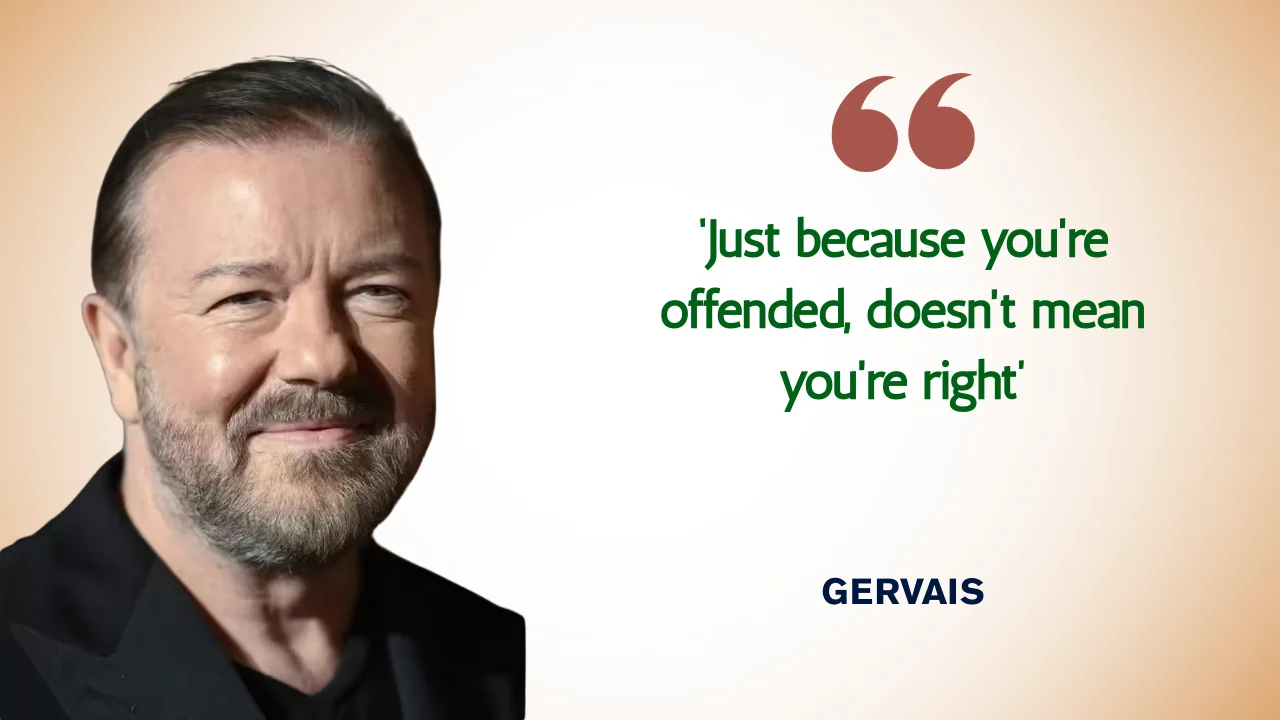
Quote of the Day by British comedian Ricky Gervais: Just because you’re offended, doesn’t mean you’re right is a thought-provoking idea that challenges how we react in daily conversations. Just because you’re offended, doesn’t mean you’re right reminds us that emotions can sometimes cloud our judgment. In a time where opinions are shared instantly and reactions are quick, this message feels more relevant than ever.
This article explores the real meaning behind Just because you’re offended, doesn’t mean you’re right, how it connects to human behavior, and why it matters in modern communication. You will learn how emotions influence thinking, how to handle disagreements, and how to grow with a more balanced mindset in both personal and professional life.
Just because you’re offended, doesn’t mean you’re right
Just because you’re offended, doesn’t mean you’re right is not about ignoring feelings. It is about understanding that emotions are not always facts. Many people react instantly when something feels uncomfortable, but discomfort does not always mean something is wrong. In fact, recent studies in 2025 show that over 65 percent of online arguments start due to emotional reactions rather than logical thinking. This highlights how important it is to pause and reflect. When you take a step back, you begin to see that offense often comes from personal beliefs or past experiences. This quote encourages self-awareness and reminds us to think before reacting, making communication more thoughtful and meaningful.
Overview Table
| Topic Insight | Details |
| Focus Keyword | Just because you’re offended, doesn’t mean you’re right |
| Core Message | Feelings are not always facts |
| Main Benefit | Better emotional control |
| Key Skill | Logical thinking over emotional reaction |
| Common Trigger | Social media discussions |
| Growth Area | Open-mindedness |
| Communication Impact | Reduced conflicts |
| Personal Development | Self-awareness |
| Social Relevance | High in digital age |
| Practical Use | Daily conversations and debates |
Meaning of the Quote
The quote Just because you’re offended, doesn’t mean you’re right highlights a simple truth. Feeling hurt or upset does not automatically make your opinion correct. People often confuse emotional reactions with reality.
Sometimes, offense comes from misunderstanding or personal bias. When we learn to question our reactions, we become more thoughtful. This helps us respond instead of react.
Why People Get Offended Easily
In today’s fast-paced world, people are more sensitive to opinions than ever before. Social media platforms have made it easy to react instantly without thinking deeply.
The quote Just because you’re offended, doesn’t mean you’re right becomes important here. Many people take things personally even when no harm was intended. Cultural differences, personal experiences, and beliefs all play a role in how we react.
The Difference Between Feelings and Facts
Understanding the gap between feelings and facts is important. Feelings are personal and can change quickly. Facts remain the same regardless of emotions.
Just because you’re offended, doesn’t mean you’re right teaches us to pause and check whether something is truly wrong or just feels wrong. This shift in thinking can improve decision-making and reduce unnecessary stress.
How This Quote Applies in Daily Life
You can apply Just because you’re offended, doesn’t mean you’re right in everyday situations. Whether it is a workplace discussion or a family conversation, this mindset helps.
Instead of reacting instantly, take a moment to understand the other person’s perspective. This approach builds stronger relationships and reduces misunderstandings.
Benefits of Understanding This Quote
When you truly understand Just because you’re offended, doesn’t mean you’re right, it changes how you see the world.
Key Benefits:
- Improved communication skills
- Better emotional balance
- Stronger relationships
- More logical thinking
- Less unnecessary conflict
These benefits help in both personal and professional growth.
Ways to Handle Offense in a Healthy Way
Handling offense properly is a skill that can be learned. The quote Just because you’re offended, doesn’t mean you’re right encourages calm thinking.
Healthy Ways to Respond:
- Pause before reacting
- Listen carefully
- Ask for clarification
- Reflect on your feelings
- Stay respectful in conversation
These steps make interactions smoother and more positive.
Importance of Open-Minded Thinking
Open-minded thinking allows you to grow. When you accept that you may not always be right, you become more flexible in your views.
Just because you’re offended, doesn’t mean you’re right supports this mindset. It teaches us to listen, learn, and adapt instead of reacting emotionally.
Role of Ego in Feeling Offended
Ego often plays a major role in how we react. When someone challenges our beliefs, we may feel attacked.
But the truth is, growth happens when we accept different opinions. Just because you’re offended, doesn’t mean you’re right reminds us to keep ego aside and focus on learning.
Social Media and Offense Culture
In 2026, digital conversations have become a major part of life. A large number of arguments online start because people react without thinking.
The quote Just because you’re offended, doesn’t mean you’re right is highly relevant in this space. It encourages mindful interaction and reduces unnecessary negativity.
How This Quote Helps in Personal Growth
Personal growth begins with self-awareness. When you understand your reactions, you can control them better.
Just because you’re offended, doesn’t mean you’re right helps you become more patient and thoughtful. Over time, this leads to better decisions and a calmer mind.
FAQs
What is the meaning of this quote?
It means that feeling offended does not prove that your opinion is correct. Emotions are not always equal to truth.
Why is this quote important today?
It is important because people react quickly, especially online. It encourages thoughtful and calm responses.
How can I apply this quote in real life?
You can pause before reacting, listen to others, and think logically instead of emotionally.
Can being offended ever be valid?
Yes, feelings are valid, but they do not always mean you are right. It is important to analyze the situation.
How does this quote help in communication?
It improves understanding, reduces conflict, and builds stronger relationships.