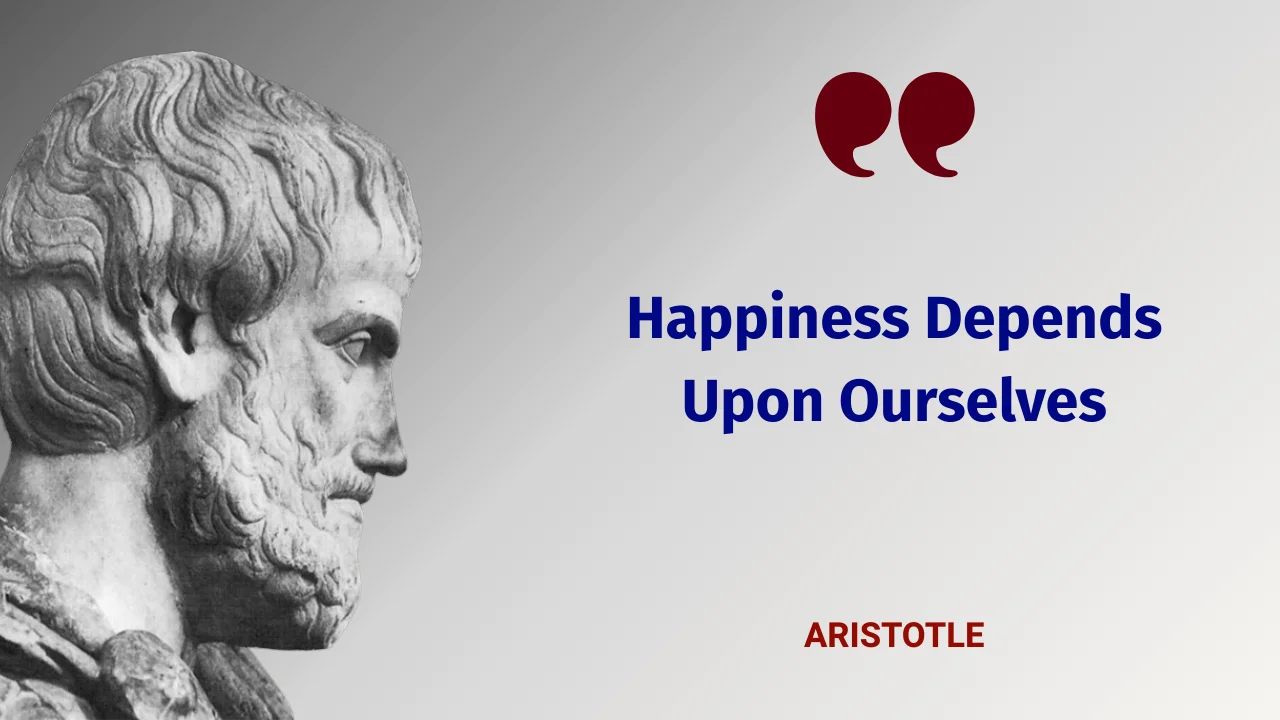
Happiness Depends Upon Ourselves: Happiness Depends Upon Ourselves is one of the most powerful ideas shared by the Greek philosopher Aristotle. Even after more than two thousand years, this simple statement still speaks directly to modern readers. The quote reminds us that happiness is not something controlled by luck, wealth, or other people. Instead, Happiness Depends Upon Ourselves, our choices, and the way we live each day.
In a world where people often look for happiness through social media success, material comfort, or public recognition, Aristotle offered a very different perspective. This article explores the deeper meaning of the quote, its philosophical roots, and why the idea that Happiness Depends Upon Ourselves continues to inspire people in the modern world.
Happiness Depends Upon Ourselves: Understanding the Core Idea
The phrase Happiness Depends Upon Ourselves reflects Aristotle’s belief that true happiness comes from personal responsibility and ethical living. According to his philosophy, happiness is not a temporary emotional state. It is a long term condition created by the way a person lives. Modern psychology in 2025 also supports this view. Studies from positive psychology show that mindset, habits, and relationships influence happiness more than money or status. When people take control of their actions, develop strong values, and pursue meaningful goals, they build a stable form of happiness. Aristotle’s message encourages readers to stop chasing external approval and start focusing on personal growth, character, and purpose. This timeless wisdom explains why discussions about the meaning of Happiness Depends Upon Ourselves continue to appear in philosophy, mental health studies, and motivational writing today.
| Topic Overview | Key Insight |
| Philosopher | Aristotle |
| Famous Quote | Happiness Depends Upon Ourselves |
| Central Philosophy | Personal responsibility for happiness |
| Key Concept | Virtue and balanced living |
| Philosophical Term | Eudaimonia or human flourishing |
| Time Period | Ancient Greece, around 4th century BCE |
| Relevance Today | Mental well being and self development |
| Modern Application | Personal growth and lifestyle choices |
| Message of the Quote | Happiness is created internally |
| Popular Use | Motivation, philosophy discussions, and life guidance |
Understanding Aristotle’s Quote on Happiness
Aristotle believed that happiness is the ultimate goal of human life. Unlike temporary pleasures, real happiness develops over time through consistent choices and moral character. The quote Happiness Depends Upon Ourselves reflects his view that individuals are responsible for shaping their own lives.
In Aristotle’s philosophy, people reach happiness by practicing virtues such as honesty, courage, patience, and wisdom. These qualities guide behavior and help individuals live meaningful lives. Modern readers often interpret this quote as a reminder that happiness is not controlled by outside events. Instead, the mindset and decisions of a person determine the direction of their life.
Today, motivational speakers and mental health experts often repeat this idea. They explain that personal habits, relationships, and emotional awareness play a bigger role in happiness than financial success or public approval.
The Philosophical Background of Aristotle’s View
To fully understand the quote Happiness Depends Upon Ourselves, it is helpful to look at Aristotle’s concept of eudaimonia. This Greek term is usually translated as happiness, but its meaning is deeper. It refers to living well and achieving human flourishing.
Aristotle believed that every person has a purpose. When people use their abilities wisely and live according to reason, they experience fulfillment. The path to happiness is therefore connected to moral development and balanced living.
His philosophy also introduced the idea of the golden mean. This principle suggests that virtue lies between two extremes. Courage, for example, exists between fear and recklessness. By maintaining balance in behavior, individuals move closer to genuine happiness.
Because of this philosophy, Aristotle argued that happiness is not random. Instead, Happiness Depends Upon Ourselves and the choices we make throughout life.
Why This Quote Still Matters Today
In modern society, many people associate happiness with material success or public recognition. Social media platforms often present a picture of happiness based on luxury lifestyles and constant achievements.
However, research in modern psychology shows that long term happiness comes from internal factors such as emotional stability, meaningful relationships, and a sense of purpose. This idea closely reflects Aristotle’s message that Happiness Depends Upon Ourselves.
The quote is especially relevant in the current era of mental health awareness. Many experts encourage people to focus on habits that support emotional well being. These include mindfulness, gratitude practices, and self reflection.
By reminding individuals that happiness begins with personal choices, Aristotle’s wisdom continues to guide modern readers who seek balance in their lives.
Key Lessons from Aristotle’s Happiness Philosophy
Aristotle’s teaching provides practical guidance that people can apply in daily life. His philosophy suggests that happiness develops gradually through character and discipline.
Important lessons from his philosophy include:
• Develop strong moral values
Living honestly and responsibly builds inner peace and trust with others.
• Practice balance in life
Avoid extreme behavior and maintain moderation in decisions and actions.
• Focus on meaningful goals
Purpose and personal growth bring deeper satisfaction than temporary pleasure.
• Invest in relationships
Healthy friendships and supportive communities contribute greatly to well being.
• Take responsibility for life choices
Recognizing that Happiness Depends Upon Ourselves encourages individuals to take control of their decisions.
These principles show that happiness is not something people simply find. It is something they actively create.
Practical Ways to Apply This Quote in Daily Life
The philosophy behind Happiness Depends Upon Ourselves can be practiced through small everyday actions. Simple habits often make the biggest difference.
Here are several practical ways to apply this idea:
• Start the day with gratitude by acknowledging positive aspects of life
• Focus on learning and personal development
• Maintain healthy relationships and communicate honestly
• Avoid constant comparison with others
• Set meaningful long term goals
• Spend time reflecting on personal values and decisions
When people consistently follow these practices, they gradually build a stronger sense of purpose and satisfaction. This process reflects Aristotle’s belief that happiness grows through daily habits.
The Difference Between Pleasure and True Happiness
One reason the quote Happiness Depends Upon Ourselves remains influential is that it clearly separates pleasure from genuine happiness.
Pleasure is short term. It can come from entertainment, shopping, or momentary excitement. These experiences feel good but often fade quickly.
True happiness is deeper and more stable. Aristotle believed it develops from living according to virtue and reason. When people focus only on pleasure, they may experience brief satisfaction but not lasting fulfillment.
Modern research in behavioral psychology supports this idea. Studies show that meaningful activities such as volunteering, learning, and building relationships create longer lasting happiness than material rewards.
This reinforces Aristotle’s message that real happiness is built through purposeful living.
Why Personal Responsibility Leads to Happiness
Another important lesson from Aristotle’s quote is the role of personal responsibility. When individuals believe their happiness depends entirely on outside circumstances, they often feel powerless.
However, the idea that Happiness Depends Upon Ourselves shifts the focus toward personal control. It encourages individuals to improve their mindset, habits, and decisions.
People who take responsibility for their emotional well being often develop stronger resilience during challenges. They also feel more confident in shaping their future.
This perspective is widely discussed in modern self development books, leadership training programs, and psychological research.
By understanding that happiness begins internally, individuals gain the freedom to design a life aligned with their values.
Aristotle’s Wisdom in the Modern World
Even in the fast paced digital age, the message of Happiness Depends Upon Ourselves remains deeply relevant. Modern life often creates pressure to achieve success quickly or compare progress with others.
Aristotle’s philosophy offers a calmer and more thoughtful approach. Instead of chasing temporary rewards, it encourages people to build character, pursue meaningful goals, and maintain balance in life.
Many modern thinkers, psychologists, and educators continue to discuss Aristotle’s teachings because they address universal human concerns. The desire for happiness, purpose, and fulfillment remains constant across generations.
The continued popularity of this quote shows that ancient wisdom still provides valuable guidance for modern readers seeking a meaningful life.
FAQs
What does the quote Happiness Depends Upon Ourselves mean?
The quote means that true happiness is created by personal choices, habits, and character. Instead of depending on external events, individuals shape their happiness through their actions and mindset.
Who said Happiness Depends Upon Ourselves?
The quote is attributed to the ancient Greek philosopher Aristotle, who believed that happiness results from living a virtuous and balanced life.
Why is Aristotle’s quote still relevant today?
The quote remains important because modern psychology confirms that internal factors such as mindset, relationships, and purpose influence happiness more than external success.
How can someone apply this philosophy in everyday life?
People can apply it by practicing gratitude, building healthy habits, maintaining meaningful relationships, and focusing on long term personal growth.
What is Aristotle’s concept of happiness?
Aristotle described happiness as eudaimonia, which means human flourishing. It refers to living a meaningful life guided by virtue, reason, and balanced behavior.