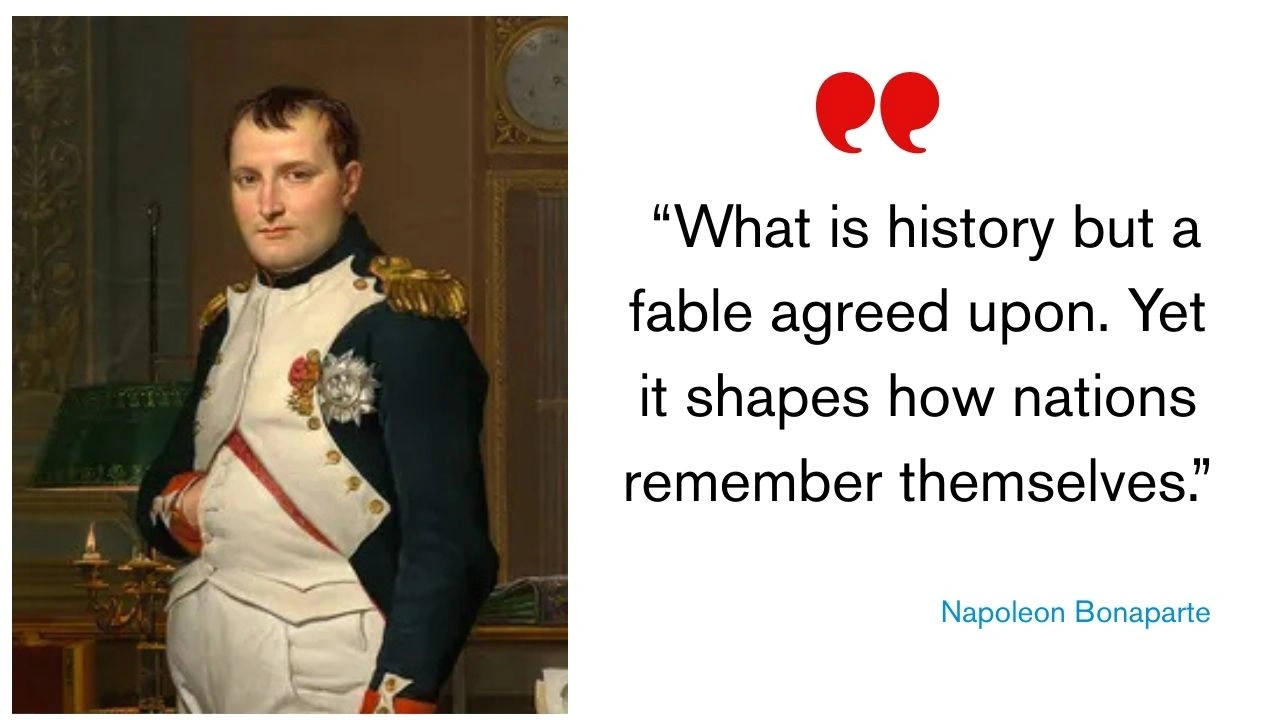
What is history but a fable agreed upon is more than just a quote. It feels like a quiet truth that makes you pause and rethink everything you have learned about the past. When you look closely, you begin to notice that history is not always a fixed set of facts. It is often shaped by people, their beliefs, and the times they lived in. This is why What is history but a fable agreed upon continues to spark curiosity and debate even today.
In this article, we will explore how history is written, why it can feel like a shared story, and how it shapes nations and identities. You will also understand how power, culture, and memory influence historical narratives. By the end, you will have a clearer and more thoughtful view of what history really means in today’s world.
What Does “What is History But a Fable Agreed Upon” Mean
What is history but a fable agreed upon is a simple yet deep idea that challenges how we see the past. It suggests that history is not always a perfect record of events. Instead, it is often a story that people collectively accept over time.
When events happen, they are recorded by individuals. These individuals have their own beliefs, limitations, and viewpoints. Over years, these records are repeated, taught, and accepted as truth. That is how a shared version of history forms.
This idea does not say that history is false. It simply reminds us that history can be selective. Some events are highlighted while others are forgotten. This makes What is history but a fable agreed upon an important thought for anyone who wants to understand history deeply.
How History is Written and Shaped
History is created through documents, stories, and research. However, it is never completely neutral. Every historian brings their own understanding to the subject.
In recent years, especially in 2025, digital archives and online research have made history more accessible. Yet, even with better tools, interpretation still plays a role.
Some key factors that shape history include:
- Personal beliefs of historians
- Cultural values of the time
- Political influence
- Availability of evidence
Because of these factors, What is history but a fable agreed upon becomes relevant in understanding how narratives are formed. History is not just discovered. It is also constructed.
The Role of Power in History
Power has always influenced history. Those in authority often control what stories are told and how they are presented.
For example, rulers and governments may highlight victories and ignore failures. This creates a version of history that supports their image. Even in modern times, media and education systems can shape public understanding.
This is why What is history but a fable agreed upon is often linked with discussions about truth and control. When one voice dominates, other perspectives may be lost.
Understanding this helps readers question and think critically instead of accepting everything at face value.
How History Shapes National Identity
History plays a major role in shaping how nations see themselves. It builds a sense of pride and belonging among people.
Countries often focus on stories of bravery, struggle, and success. These stories become part of national identity. They influence how citizens think and feel about their country.
For example, independence movements and cultural achievements are often celebrated. These shared memories unite people.
This shows how What is history but a fable agreed upon connects with identity. The stories people believe shape their sense of who they are.
Importance of Questioning Historical Narratives
Questioning history is not about rejecting it. It is about understanding it better. When you explore different viewpoints, you get a more complete picture.
Here are some simple ways to question history:
- Read multiple sources
- Compare different perspectives
- Understand the background of the writer
- Look for missing voices
In today’s digital age, access to global information has made this easier than ever. Still, it requires effort and curiosity.
By doing this, you truly understand the depth behind What is history but a fable agreed upon.
Key Reasons Why History Can Be Seen as a Fable
- History is written by humans with biases
- Some events are simplified for easy understanding
- Certain groups or voices may be ignored
- Stories can change over time as new evidence appears
These points explain why What is history but a fable agreed upon continues to be a powerful idea in modern discussions.
The Balance Between Fact and Interpretation
Even though history can feel like a story, it is still based on real events. There are facts, dates, and evidence that support historical records.
However, interpretation plays a role in connecting these facts. Two historians may study the same event but reach different conclusions.
The goal is to find a balance between facts and interpretation. This is where critical thinking becomes important.
So, What is history but a fable agreed upon does not mean history is unreliable. It means history is layered and complex.
Impact of History on Society Today
History is not just about the past. It influences the present in many ways. It affects education, politics, and cultural values.
In 2025, discussions around history have become more active. People are revisiting old narratives and bringing forward new perspectives.
Some ways history impacts society include:
- Shaping laws and policies
- Influencing public opinion
- Teaching lessons from past mistakes
This shows how What is history but a fable agreed upon is still relevant in today’s world.
Why Understanding History Matters
Understanding history helps you become more aware and informed. It teaches you to think critically and question what you learn.
It also helps you understand different cultures and perspectives. This builds empathy and knowledge.
When you think about What is history but a fable agreed upon, you begin to see history as something active, not fixed. It evolves as new information comes forward.
FAQs
1. What does What is history but a fable agreed upon mean in simple words?
It means history is often shaped by people’s views and accepted as a shared story over time, not always a complete truth.
2. Is history reliable if it is seen as a fable?
Yes, history is based on real events, but interpretation and bias can affect how those events are presented.
3. Why do historians have different views on the same event?
Historians come from different backgrounds and may use different sources, which leads to varied interpretations.
4. How can readers identify bias in history?
Readers can compare multiple sources, check the author’s background, and look for missing perspectives.
5. Why is this idea important today?
It helps people think critically, question narratives, and understand that history is not always one-sided.