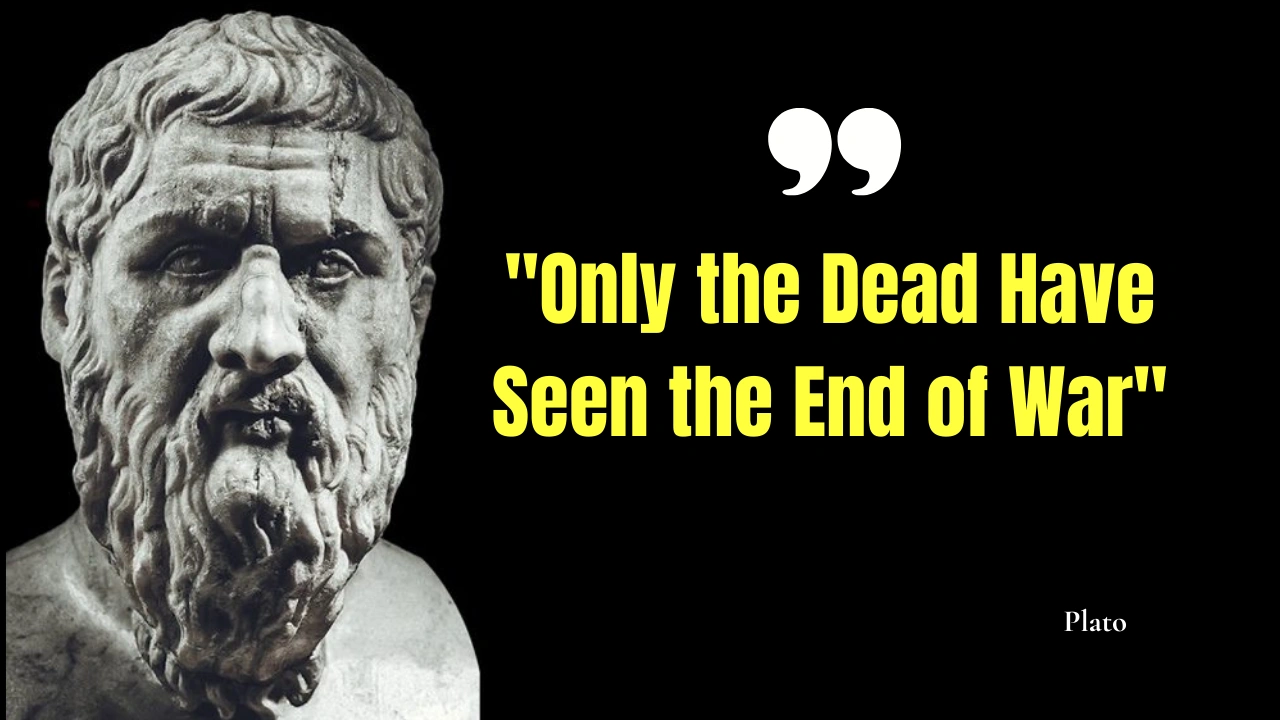
Quote of the day by Plato is one of the most shared philosophical lines when people talk about war, peace, and the repeating patterns of human history. Even though Plato lived more than two thousand years ago, this short statement continues to spark conversations among readers, historians, and students of philosophy. The Quote of the day by Plato captures a powerful truth that many people recognize when they look at past and present global conflicts.
The Quote of the day by Plato is often discussed in books, academic discussions, and online quote collections because it reflects a deep observation about society. In this article, we will explore the meaning of this quote, understand the life of Plato, and examine why his words still feel relevant in the modern world. You will also discover Plato’s major philosophical ideas, his influence on education, and the lessons that readers can learn from his timeless wisdom.
Quote of the day by Plato
The Quote of the day by Plato is widely shared because it highlights an uncomfortable reality about human civilization. The line “Only the dead have seen the end of war” suggests that conflict has appeared repeatedly throughout history and continues to affect societies across generations. When readers encounter the Quote of the day by Plato, they often pause to think about how often wars have shaped the course of history.
Many historians point out that there have been thousands of recorded wars in the last several centuries alone. Even in the twenty first century, global tensions, regional conflicts, and political struggles still occur in many parts of the world. Because of this reality, the Quote of the day by Plato remains meaningful for modern readers who are trying to understand the relationship between power, politics, and peace.
The message behind the Quote of the day by Plato is not meant to glorify war. Instead, it reminds people that peace is fragile and requires effort from leaders, citizens, and communities. When societies forget the cost of conflict, history often repeats the same painful lessons.
Overview of Plato and His Famous Quote
| Topic | Description |
| Philosopher | Plato |
| Historical Period | Classical Greek philosophy |
| Birthplace | Athens in ancient Greece |
| Birth Year | Around 428 BCE |
| Death Year | Around 348 BCE |
| Mentor | Socrates |
| Famous Student | Aristotle |
| Educational Institution | The Academy in Athens |
| Major Work | The Republic |
| Famous Quote | Only the dead have seen the end of war |
Plato’s Early Life and Background
Plato was born in Athens during a time when the city was an important center of culture, politics, and intellectual life. His family belonged to the upper class of Athenian society, which meant he grew up surrounded by political discussions and social debates. This environment played an important role in shaping his curiosity about leadership, justice, and human behavior.
During his early years, Plato met Socrates, a philosopher who became his teacher and greatest influence. Socrates was known for asking thoughtful questions that encouraged people to examine their beliefs. Instead of accepting ideas without reflection, Socrates believed that individuals should search for truth through discussion and reasoning.
Plato admired this approach and began studying under Socrates. The experience changed his life. Many of Plato’s writings later described conversations between Socrates and other thinkers, showing how philosophy could help people better understand the world around them.
Plato’s Big Ideas in Philosophy
Plato’s philosophy explored some of the most important questions about knowledge, reality, and morality. One of his most famous theories is the idea of Forms. According to Plato, the physical world that people experience is only a shadow of a deeper and more perfect reality.
For example, concepts such as justice, beauty, and equality exist in perfect forms beyond the physical world. The things people see around them are only imperfect reflections of those ideals. Plato believed that true knowledge comes from understanding these deeper truths rather than relying only on sensory experience.
This philosophical perspective encouraged people to look beyond surface level appearances. It also helped explain why Plato believed that wisdom and knowledge should guide society. When readers think about the Quote of the day by Plato, they can see how his philosophical thinking focused on understanding human behavior and social systems.
Plato’s Life and Influence
A major turning point in Plato’s life occurred when Socrates was put on trial and executed by the Athenian government in 399 BCE. Plato was deeply affected by this event. The death of his teacher made him question the fairness of political systems and the role of justice in society.
After this event, Plato traveled to different regions around the Mediterranean. Historians believe he visited places such as southern Italy and possibly Egypt. During these travels, he encountered new ideas about mathematics, science, and governance.
When Plato eventually returned to Athens, he founded an educational institution known as the Academy. This school became one of the earliest organized centers of higher learning in the Western world. Students gathered there to study philosophy, mathematics, science, and political theory.
The Academy operated for centuries and influenced generations of thinkers. Because of institutions like this, ideas such as the Quote of the day by Plato have continued to reach new audiences even thousands of years later.
Plato’s Writings and Famous Works
Plato wrote many philosophical texts that are still studied in universities around the world. His works were usually written as dialogues in which different characters discuss complex ideas.
Some of his most important writings include:
• The Republic
• Apology
• Phaedo
• Symposium
• Timaeus
Among these works, The Republic is perhaps the most influential. In this book, Plato describes his vision of an ideal society and introduces the idea of the philosopher king. According to Plato, the best leaders are individuals who possess wisdom, knowledge, and a deep understanding of justice.
These writings show why Plato remains one of the most influential philosophers in history.
Meaning Behind the Famous Quote
The Quote of the day by Plato reflects a realistic observation about the long history of war. From ancient battles between city states to modern international conflicts, warfare has repeatedly shaped the development of civilizations.
Plato’s statement suggests that people living in the world will likely witness some form of conflict during their lifetime. Only those who have passed away will no longer experience war.
Many readers interpret the Quote of the day by Plato as a reminder of the human cost of violence. Wars often lead to loss of life, destruction of communities, and long lasting social and economic damage.
By reflecting on the meaning of this quote, individuals may become more aware of the importance of diplomacy, cooperation, and peaceful solutions to disagreements.
Why the Quote Still Matters Today
The Quote of the day by Plato remains relevant because modern societies still face challenges related to power, politics, and international relations. According to recent global studies on conflict trends, several regions around the world continue to experience armed conflicts and political tensions.
Because of this, educators often use the Quote of the day by Plato when discussing world history, peace studies, and political philosophy. The quote encourages readers to think critically about how conflicts begin and how societies can work toward lasting peace.
In the digital age, philosophical quotes spread quickly through social media platforms, educational blogs, and online discussions. This has allowed the Quote of the day by Plato to reach a new generation of readers who are interested in wisdom from ancient thinkers.
Other Famous Quotes by Plato
Plato shared many powerful insights about knowledge, leadership, and human behavior. Some of his well known quotes include:
• Wise people speak because they have something to say
• The beginning is the most important part of the work
• Courage is knowing what not to fear
These quotes show Plato’s ability to express deep ideas in simple language that people can easily understand.
Lessons We Can Learn From Plato
The Quote of the day by Plato highlights several important lessons that readers can apply to modern life.
• Knowledge and education should guide decision making
• Understanding history helps societies avoid repeating mistakes
• Peace requires effort from individuals and leaders
• Philosophy encourages deeper thinking about society and ethics
These lessons explain why Plato’s words continue to inspire readers around the world.
FAQs
What does the Quote of the day by Plato mean?
The quote suggests that war has been a recurring part of human history. People who are alive may witness conflicts, while those who have died will no longer experience war.
Who was Plato and why is he important?
Plato was an ancient Greek philosopher and student of Socrates. His writings and teachings shaped Western philosophy and influenced education, politics, and ethics.
Is the Quote of the day by Plato historically accurate?
The quote reflects a philosophical observation rather than a literal historical claim. It highlights the repeating pattern of conflict in human history.
What is Plato most famous for?
Plato is widely known for his philosophical works, especially The Republic, and for founding the Academy in Athens, one of the earliest institutions of higher learning.
Why do people still share the Quote of the day by Plato today?
The quote continues to resonate because it speaks about the lasting presence of war and the importance of striving for peace in society.