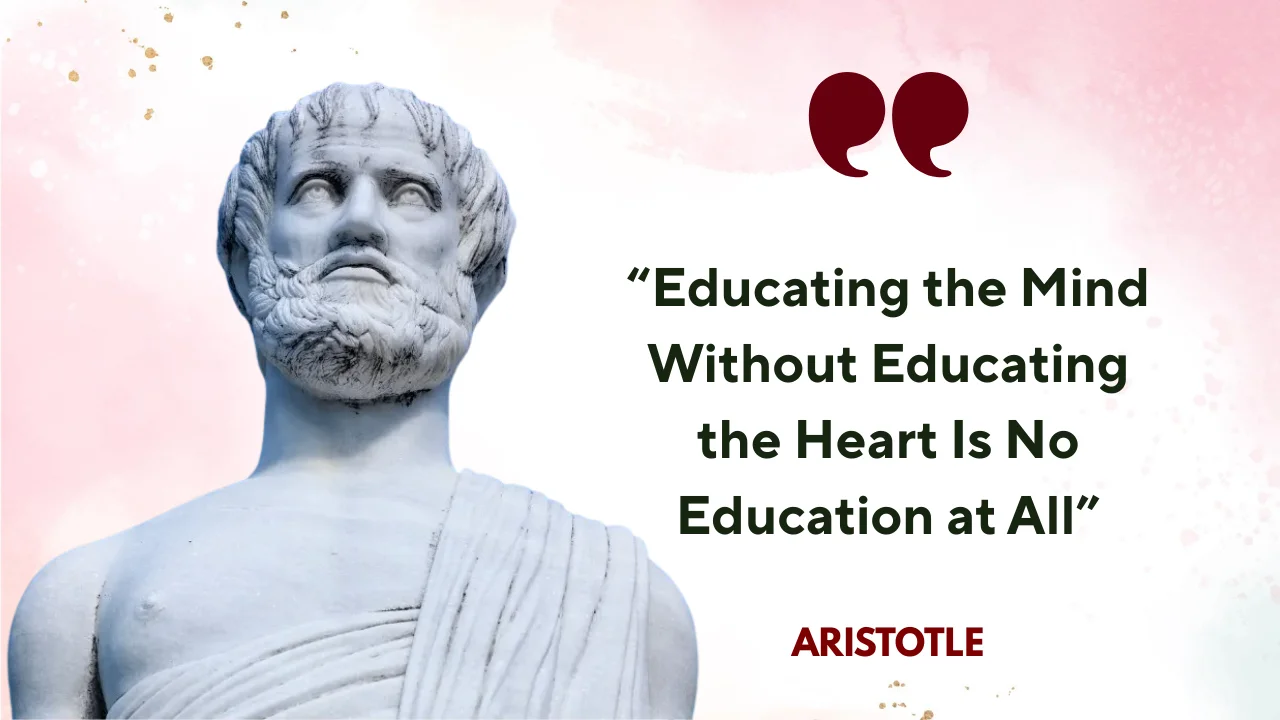
Quote of the Day by Aristotle: Educating the mind without educating the heart is one of the most powerful ideas ever shared about learning. Aristotle believed that knowledge alone does not make a person truly educated. Intelligence without empathy, values, and character can lead to misuse of knowledge. That is why the phrase educating the mind without educating the heart still resonates strongly with educators, parents, and students today.
In a world that focuses heavily on academic success, exams, and competition, the message behind educating the mind without educating the heart reminds us of something essential. Education should build thoughtful, responsible, and compassionate individuals. This article explores the deeper meaning of Aristotle’s quote, why emotional and moral education matters, and how modern education systems can apply this timeless wisdom.
Educating the Mind Without Educating the Heart
Educating the mind without educating the heart highlights a critical truth about real education. A person may achieve high academic success, master complex subjects, and gain impressive qualifications. Yet if that person lacks empathy, kindness, and ethical understanding, the education remains incomplete. Aristotle believed that true learning develops both intellectual ability and moral character. Education should help individuals think clearly, act responsibly, and treat others with respect. When schools and families focus only on academic performance, students may become knowledgeable but not necessarily wise. Modern education experts increasingly agree with this perspective. Research in social and emotional learning shows that students who develop empathy, self awareness, and emotional intelligence perform better academically and socially. This reinforces the importance of combining knowledge with character development in every learning environment.
Overview of the Topic
| Key Aspect | Explanation |
| Quote Author | Aristotle |
| Core Message | Education must develop both intellect and character |
| Focus Keyword Theme | Educating the mind without educating the heart |
| Education Philosophy | Balanced intellectual and moral development |
| Importance Today | Relevant for modern education systems |
| Emotional Intelligence | Helps students manage emotions and relationships |
| Role of Schools | Teach knowledge along with values |
| Role of Parents | Guide children in empathy and responsibility |
| Social Impact | Creates ethical and responsible citizens |
| Long Term Benefit | Builds a balanced and compassionate society |
Understanding Aristotle’s Quote
Aristotle was one of the most influential philosophers in history. His thoughts about ethics, education, and human behavior still influence modern thinking. When he spoke about educating the mind without educating the heart, he was emphasizing the role of moral character in human development.
Knowledge alone can make people capable, but character determines how that knowledge is used. A person may have excellent technical skills, but without integrity and compassion, those skills might not benefit society.
This idea is deeply connected to ethical education and character building. Aristotle believed education should shape responsible individuals who contribute positively to their communities. In modern discussions about holistic education and character development, this quote continues to guide educators and policymakers.
Why Education Must Develop Both Mind and Heart
Education shapes more than academic skills. It influences how individuals think, behave, and interact with others. When schools focus only on grades and achievements, students may miss essential lessons about empathy, cooperation, and ethical decision making.
The principle of educating the mind without educating the heart shows why balanced education is necessary. Students who learn both intellectual skills and emotional awareness are more likely to become responsible leaders and thoughtful citizens.
Studies in education psychology show that students who develop emotional intelligence tend to perform better in teamwork, leadership, and communication. These skills are highly valued in modern workplaces and communities.
Balanced education encourages curiosity, compassion, responsibility, and social awareness. These qualities help students succeed not only academically but also in life.
The Role of Emotional Intelligence in Education
Emotional intelligence has become a major topic in modern education research. It refers to the ability to understand emotions, manage personal feelings, and recognize the emotions of others.
This concept strongly connects with the idea of educating the mind without educating the heart. Emotional intelligence helps students develop self control, empathy, and resilience. These abilities are essential for personal growth and healthy relationships.
Schools that introduce social and emotional learning programs often see improvements in student behavior and academic performance. According to education studies in recent years, students with strong emotional intelligence show better classroom engagement and higher levels of cooperation.
Teachers play a key role in encouraging emotional awareness. When classrooms promote respect, communication, and understanding, students develop both intellectual confidence and emotional strength.
Practical Ways to Educate the Mind and Heart
Education that balances intellect and character can be introduced through simple but meaningful practices. Teachers and parents can encourage both academic growth and moral development in everyday learning.
Important Ways Schools Can Teach Values
Schools can create an environment where knowledge and character grow together. Some effective strategies include:
- Encouraging teamwork and collaborative learning
- Including discussions about ethics and responsibility
- Promoting kindness and respectful communication
- Teaching students to solve conflicts peacefully
- Recognizing acts of empathy and cooperation
These practices support the principle behind educating the mind without educating the heart and help students develop balanced personalities.
Ways Parents Can Support Heart Centered Learning
Parents also play a powerful role in shaping children’s character. Home is often the first place where values and emotional awareness develop.
Some helpful approaches include:
- Talking openly about feelings and empathy
- Encouraging children to help others
- Teaching gratitude and respect for people
- Modeling honesty and responsible behavior
- Supporting learning that builds both skills and values
When families reinforce these lessons, children grow with both knowledge and compassion.
Why This Quote Is Still Relevant Today
Modern education systems face increasing pressure to produce high academic results. Standardized testing, competitive exams, and career focused learning often dominate educational priorities.
However, the message of educating the mind without educating the heart remains extremely relevant. Many experts believe that emotional intelligence, ethical leadership, and social responsibility are essential skills for the future.
Technology, artificial intelligence, and digital communication have transformed the way people interact. While knowledge is more accessible than ever, the need for empathy and ethical thinking has also increased.
Educational institutions worldwide are now introducing character education programs and social emotional learning frameworks. These initiatives reflect the same philosophy that Aristotle emphasized centuries ago.
The Impact of Value Based Education
Value based education focuses on developing integrity, compassion, and responsibility alongside academic knowledge. This approach aligns closely with the concept of educating the mind without educating the heart.
Students who experience value based learning often show stronger community awareness and better decision making skills. They also tend to build healthier relationships and demonstrate greater leadership abilities.
A society that promotes balanced education benefits in many ways. Communities become more cooperative, workplaces become more ethical, and leaders become more responsible.
Education that combines intellect with values prepares individuals not only for professional success but also for meaningful contributions to society.
Lessons We Can Learn From Aristotle’s Quote
Aristotle’s insight provides several important lessons for modern learners and educators.
- Knowledge should always be guided by ethical responsibility
- Education should develop character along with intellectual ability
- Emotional awareness improves communication and leadership
- Compassion and empathy are essential qualities in society
- Balanced learning creates wiser and more responsible individuals
These lessons show why educating the mind without educating the heart continues to inspire discussions about meaningful education.
FAQs
What does the quote educating the mind without educating the heart mean?
The quote means that knowledge alone does not make someone truly educated. Real education also includes developing empathy, moral values, and responsible behavior.
Who said educating the mind without educating the heart is no education at all?
The quote is attributed to Aristotle, a Greek philosopher known for his influence on ethics, education, and philosophy.
Why is emotional intelligence important in education?
Emotional intelligence helps students understand their emotions and communicate effectively with others. It improves relationships, teamwork, and problem solving skills.
How can schools teach both knowledge and values?
Schools can combine academic learning with character education, teamwork activities, ethical discussions, and social emotional learning programs.
Why is Aristotle’s quote still important today?
The quote remains relevant because modern education often focuses heavily on academic success. Aristotle reminds educators that character and empathy are equally important for building responsible individuals.