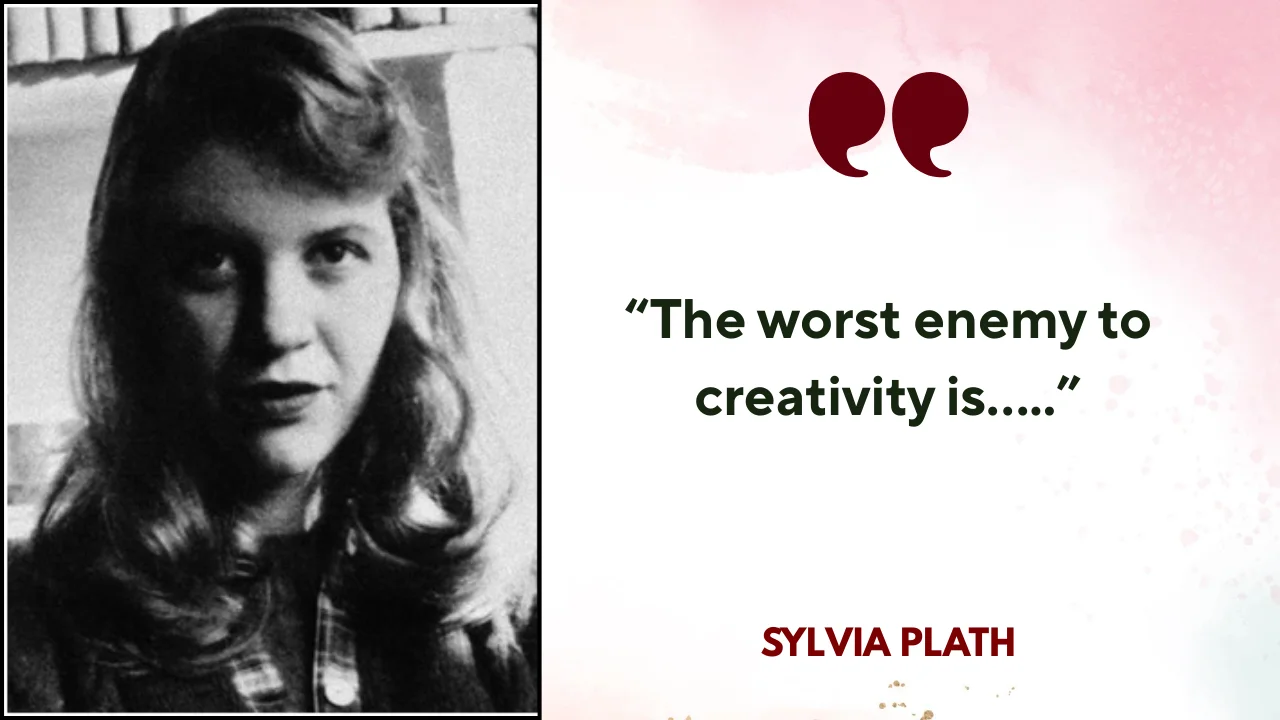
The worst enemy to creativity: The worst enemy to creativity is something almost every creator faces at some point. Whether someone writes, paints, designs, or builds ideas, there is often a quiet voice that questions the value of their work. That inner voice creates hesitation and slowly stops creative energy. Sylvia Plath captured this truth perfectly when she said that the worst enemy to creativity is self doubt.
This article explores the deeper meaning behind the quote and why it still matters today. Creativity plays a huge role in modern careers, digital content, innovation, and personal expression. Yet many people struggle to express their ideas because of fear and doubt. In the sections ahead, we will look at why self doubt blocks imagination, how it affects creative thinking, and practical ways to overcome it.
The worst enemy to creativity and why it stops ideas
The idea that the worst enemy to creativity is self doubt explains a problem that many people experience but rarely discuss. Creativity grows when people feel free to experiment, explore ideas, and express themselves. Self doubt does the opposite. It forces the mind to judge ideas before they even have the chance to develop.
In recent years, creativity has become one of the most valuable skills in the modern economy. Reports from the World Economic Forum show that creative thinking is among the top skills required in workplaces today. Despite this growing demand, many talented individuals struggle to share their ideas because they believe their work is not good enough.
When people constantly question their ability, the brain shifts from creation to criticism. Instead of focusing on imagination, it focuses on fear of failure. This mental barrier explains why the worst enemy to creativity is not lack of knowledge or skill but the lack of confidence to start.
Overview of the Topic
| Topic Area | Quick Insight |
| Quote Meaning | Explains the connection between creativity and self doubt |
| Author | Sylvia Plath, an influential modern poet and writer |
| Core Message | Self doubt prevents people from expressing ideas |
| Creativity Impact | Fear and hesitation block imagination |
| Modern Relevance | Creativity is a top skill in digital and professional fields |
| Psychological Factor | Negative self talk weakens confidence |
| Common Creative Struggles | Perfectionism, fear of judgment, comparison |
| Growth Strategy | Practice creativity without expecting perfection |
| Confidence Building | Small daily habits strengthen creative thinking |
| Key Lesson | Trusting ideas helps creativity grow |
Understanding Sylvia Plath’s Quote
Sylvia Plath was known for her deep and honest writing style. Her work often explored emotions, identity, and personal struggles. When she said the worst enemy to creativity is self doubt, she was describing a very real experience that many creators face.
Self doubt is the feeling that what you create is not valuable or impressive enough. This feeling can stop someone before they even begin. A writer might avoid starting a new article. An artist might hesitate to sketch a new idea. A student may refuse to share a creative project.
The problem is not a lack of ideas. The problem is fear of judgment. Many people worry about criticism from others or compare themselves with successful creators online. Social media has increased this comparison culture, making it easier for self doubt to grow.
Plath’s quote reminds us that creativity requires courage and belief in one’s ideas.
Why Self Doubt Blocks Creativity
To understand why the worst enemy to creativity is self doubt, it is important to understand how the brain handles fear.
Creative thinking requires an open and relaxed mindset. The brain needs space to connect ideas, imagine possibilities, and experiment with new concepts. Self doubt interrupts this process by activating worry and stress.
When someone constantly questions their ability, they start to overthink every step. Instead of focusing on creating, they focus on avoiding mistakes. This leads to hesitation and procrastination.
Research in psychology shows that fear of failure is one of the biggest reasons people avoid creative work. Many talented individuals delay projects because they believe the result must be perfect.
However, creativity rarely begins with perfection. It usually starts with rough ideas that improve through practice and revision.
Signs That Self Doubt Is Affecting Creativity
Sometimes people do not realize that self doubt is limiting their creativity. The effects appear through daily habits and thought patterns.
Common signs include:
- Waiting for the perfect idea before starting
- Feeling uncomfortable sharing creative work
- Comparing personal progress with others online
- Constantly editing or deleting early drafts
- Believing that other people are naturally more creative
When these behaviors become common, it often means the worst enemy to creativity has already entered the creative process. Recognizing these signs helps people understand what is holding them back.
How to Overcome Self Doubt and Unlock Creativity
Overcoming self doubt requires a shift in mindset. Instead of focusing on perfection, creators must focus on progress.
A practical way to defeat the worst enemy to creativity is by allowing ideas to exist without judging them too quickly. Creative work improves through experimentation.
Helpful steps include:
- Start with simple ideas instead of waiting for big inspiration
- Accept that mistakes are part of creative growth
- Focus on learning rather than proving talent
- Create regularly to build confidence
These habits help train the brain to think creatively again. Over time, the mind becomes less focused on fear and more focused on exploration.
Simple Habits That Boost Creative Confidence
Confidence plays a major role in defeating the worst enemy to creativity. Small daily habits can strengthen creative thinking and reduce fear.
Examples of helpful habits include:
- Writing thoughts in a notebook every day
- Reading inspiring books or articles
- Practicing brainstorming without judgment
- Exploring new hobbies or creative activities
- Allowing unfinished ideas to develop naturally
These habits may seem small, but they slowly build creative confidence. When the brain becomes comfortable generating ideas, creativity begins to flow more freely.
Why Imperfect Work Is Important for Creativity
One of the biggest misconceptions about creativity is the belief that great work appears instantly. In reality, most successful creators produce many imperfect drafts before reaching a final result.
Understanding this helps people see why the worst enemy to creativity is perfection driven thinking.
Every creative field follows this pattern. Writers revise drafts multiple times. Designers test many concepts before choosing the best one. Entrepreneurs refine ideas through experimentation.
Imperfect work is not failure. It is a step toward improvement. When people accept this process, creativity becomes less stressful and more enjoyable.
Creativity Requires Courage
Creative expression always involves vulnerability. Sharing ideas means allowing others to see personal thoughts and perspectives.
This is why courage is essential for creativity. Courage allows people to continue creating even when uncertainty exists.
Sylvia Plath’s message reminds us that the biggest challenge is not talent or resources. The biggest challenge is overcoming the inner voice that questions every idea.
When creators learn to move forward despite doubt, they weaken the worst enemy to creativity and strengthen their creative identity.
The Power of Believing in Your Ideas
Belief in one’s ideas does not mean believing every idea is perfect. It means giving ideas the opportunity to grow.
History shows that many groundbreaking ideas began as small experiments. Writers, inventors, and artists often faced criticism before their work was appreciated.
The difference between successful creators and those who stop early often comes down to persistence. Those who continue creating eventually develop stronger ideas and greater confidence.
Recognizing that the worst enemy to creativity is self doubt helps creators stay focused on growth instead of fear.
FAQs
What does Sylvia Plath mean by the worst enemy to creativity?
Sylvia Plath meant that self doubt stops people from expressing their ideas. When individuals constantly question their abilities, they hesitate to create and share their work.
Why does self doubt affect creative thinking?
Self doubt creates fear of failure and judgment. This fear interrupts the imagination process and makes it difficult for the brain to generate ideas freely.
Can creativity improve with regular practice?
Yes. Research and creative studies show that creativity improves when people practice thinking, writing, drawing, or brainstorming regularly.
How can someone overcome creative self doubt?
People can overcome self doubt by starting small projects, practicing daily creativity, accepting mistakes, and focusing on learning instead of perfection.
Why is creativity important today?
Creativity is one of the most valuable skills in modern industries such as digital marketing, content creation, technology, and innovation. It helps people solve problems and develop new ideas.