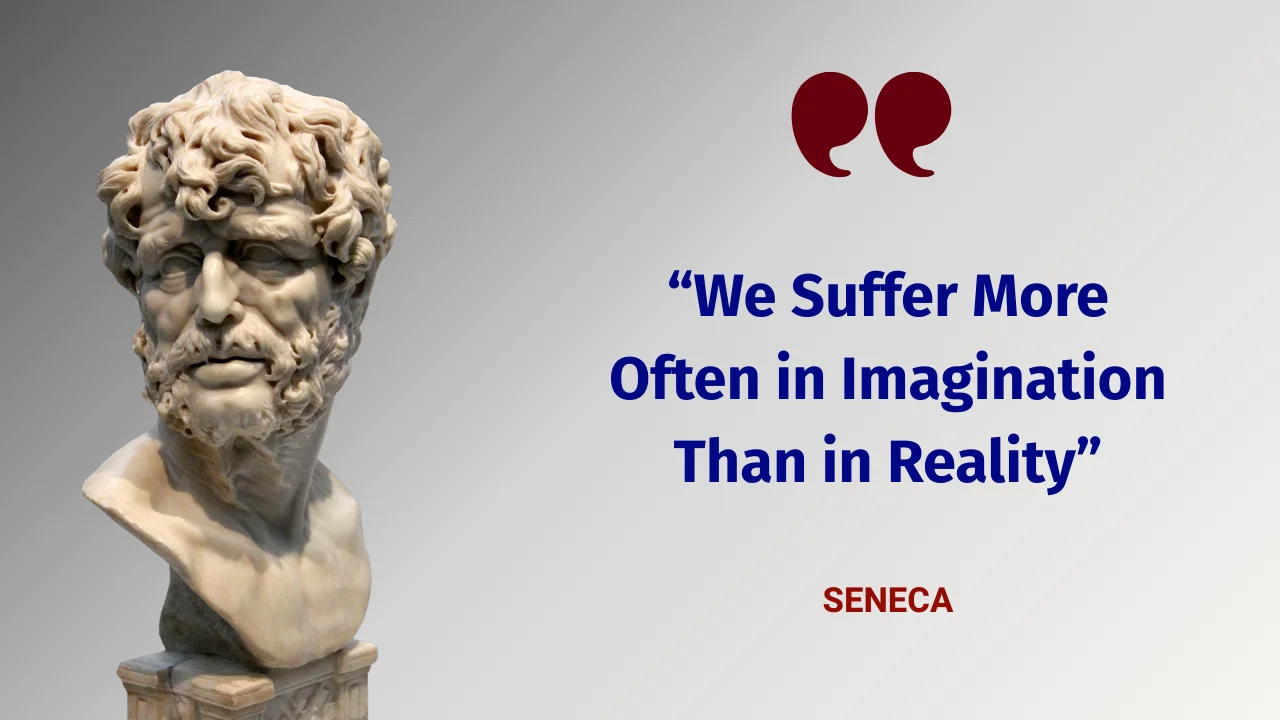
Seneca Quote of the Day: Wisdom from ancient philosophy still speaks clearly to modern life. One powerful example comes from the Stoic thinker Seneca. His famous line, “We suffer more often in imagination than in reality,” captures a truth that many people experience every day. We worry about future problems, imagine worst-case scenarios, and allow fear to grow in our minds even before anything actually happens. The Seneca Quote of the Day reminds us that much of our stress is created by our own thoughts rather than real events.
When you reflect on the Seneca Quote of the Day, you begin to see how powerful the human mind can be. The quote highlights how imagination can magnify fears and turn small concerns into large emotional burdens. Understanding the deeper message behind the Seneca Quote of the Day can help us develop a calmer mindset, reduce overthinking, and focus on what truly matters in life.
Seneca Quote of the Day
The Seneca Quote of the Day carries a timeless lesson about how people experience fear and anxiety. Seneca believed that most suffering comes not from real events but from the stories our minds create about the future. When we imagine failure, rejection, or loss, our bodies react as if those events are already happening. This reaction creates stress and emotional discomfort. By reflecting on the Seneca Quote of the Day, readers can learn to separate imagined fears from real challenges. Stoic philosophy encourages people to focus only on what they can control and accept the rest with calmness. This mindset helps reduce unnecessary worry and allows individuals to face life’s situations with clarity and strength.
Overview of the Quote
| Aspect | Details |
| Author | Seneca |
| Full Name | Lucius Annaeus Seneca |
| Philosophy | Stoicism |
| Famous Quote | “We suffer more often in imagination than in reality.” |
| Main Idea | Fear is often created by imagination |
| Key Teaching | Control thoughts to reduce unnecessary suffering |
| Relevance Today | Helps people manage stress, anxiety, and overthinking |
Who Was Seneca?
Seneca was a Roman philosopher, playwright, and political advisor who lived during the first century. He is widely known as one of the most important figures in Stoic philosophy. Stoicism focuses on developing emotional strength, rational thinking, and inner peace regardless of external circumstances.
Seneca served as an advisor to the Roman emperor Nero and wrote many essays and letters discussing ethics, happiness, and the human mind. His works were practical rather than purely theoretical. Instead of complicated philosophy, he offered advice that people could apply in daily life.
Even today, many readers discover Stoic teachings through his writings. The wisdom behind the Seneca Quote of the Day reflects his belief that emotional suffering often comes from our own interpretation of events rather than the events themselves.
The Meaning Behind the Quote
The quote “We suffer more often in imagination than in reality” reveals an important psychological truth. Human beings often worry about things that never actually happen. The mind begins to imagine negative scenarios, and those thoughts create stress long before any real problem appears.
For example, someone might worry about losing a job, failing an exam, or being judged by others. These fears exist mostly in imagination. Yet the emotional response feels real. Seneca believed that learning to recognize this pattern is essential for a peaceful life.
The message within the Seneca Quote of the Day encourages people to question their fears. Instead of assuming the worst outcome, we should pause and ask whether the situation is truly happening or simply imagined.
Why Our Minds Create Imaginary Suffering
Several psychological factors explain why people experience imagined suffering.
First, humans naturally try to predict the future. This ability helps us plan and prepare, but it can also lead to unnecessary worry. When the mind anticipates danger, it often exaggerates possible outcomes.
Second, uncertainty makes people uncomfortable. When we do not know what will happen next, the brain fills the gap with negative possibilities. This is why anxiety often appears during times of change.
Third, repeated negative thinking can become a habit. Over time, the mind automatically expects problems even when none exist.
Reflecting on the Seneca Quote of the Day can help break this cycle. By recognizing that many fears are imagined, we can train our minds to respond more calmly.
Stoic Philosophy and Emotional Control
Stoicism teaches that while we cannot control external events, we can control our reactions. This idea forms the foundation of Stoic practice.
According to Stoic thinkers, emotional suffering usually comes from our judgments about events rather than the events themselves. When people learn to question those judgments, they gain greater emotional stability.
The wisdom behind the Seneca Quote of the Day aligns perfectly with this philosophy. Instead of allowing imagination to create unnecessary distress, Stoicism encourages rational thinking and mental discipline.
This approach does not mean ignoring problems. Instead, it means responding thoughtfully rather than emotionally.
Practical Lessons From the Quote
The insight contained in the Seneca Quote of the Day offers several practical lessons that anyone can apply in everyday life.
First, learn to observe your thoughts. When worry appears, ask yourself whether the situation is real or imagined.
Second, focus on the present moment. Many fears exist only in future scenarios that may never occur.
Third, prepare calmly for challenges without assuming the worst outcome.
Fourth, practice mental discipline through reflection or journaling. Stoic thinkers often wrote about their daily experiences to better understand their thoughts.
These simple habits can gradually reduce unnecessary stress and improve emotional balance.
How This Quote Applies to Modern Life
Although Seneca lived nearly two thousand years ago, his insight feels incredibly relevant today. Modern life often encourages constant worry about career, finances, relationships, and social expectations.
Technology and social media have increased the pressure many people feel. Constant comparison with others can trigger anxiety about the future.
The Seneca Quote of the Day reminds us that many of these fears exist only in our imagination. By recognizing this, we can regain control over our thoughts and focus on meaningful actions rather than imagined problems.
In many ways, this ancient quote provides guidance that aligns with modern psychological practices used to treat anxiety and stress.
Simple Ways to Practice Seneca’s Advice
Applying the wisdom of the Seneca Quote of the Day does not require complicated techniques. Small daily habits can make a significant difference.
Write down worries and examine whether they are realistic.
Focus attention on actions that are within your control.
Practice slow breathing when anxious thoughts appear.
Remind yourself that most fears never become reality.
With consistent practice, these strategies help train the mind to remain calm and focused.
FAQs
What does Seneca mean by “We suffer more often in imagination than in reality”?
Seneca means that many of our worries and fears exist only in our thoughts. We imagine negative outcomes and experience stress even when those situations have not happened.
Why is the Seneca Quote of the Day still popular today?
The quote remains relevant because modern life involves stress, uncertainty, and overthinking. Seneca’s insight helps people understand how their thoughts influence emotional wellbeing.
How can this quote help reduce anxiety?
The quote encourages people to question their fears and focus on reality instead of imagined problems. This shift in thinking can significantly reduce unnecessary anxiety.
What is Stoicism and how does it relate to this quote?
Stoicism is a philosophy that teaches emotional control and rational thinking. The Seneca Quote of the Day reflects the Stoic belief that we should focus only on what we can control.
Can ancient philosophy still help with modern mental health?
Yes. Many modern psychological techniques share ideas similar to Stoic philosophy, including questioning negative thoughts and focusing on the present moment.